On August 26, 2026, Massachusetts joined a $17.1 billion multistate settlement with Meta, one of the largest state consumer protection settlements in history. Massachusetts could receive up to $516 million, including roughly $366 million guaranteed over the next ten years. The Massachusetts Afterschool Partnership and the Fund IRL MA coalition is calling on state leaders to invest these dollars directly in young people and the programs that support their well-being.
-
Attorney General Andrea Joy Campbell joined a bipartisan coalition of attorneys general in reaching a $17.1 billion settlement with Meta, resolving claims that the company designed and ran Instagram and Facebook in ways that harmed young people. The agreement, still subject to court approval, requires Meta to make significant changes to protect children and teens online, and it could bring up to $516 million to Massachusetts. Part of those funds is directed to remediating social media's harms to young people, and part to the state's General Fund.
Young people deserve to grow up healthy, connected, and supported. Stronger protections online matter, but they are only part of the answer. Young people also need real opportunities to connect, build skills, form relationships, and simply be kids — in real life.
The settlement itself recognizes this. It names afterschool and summer programs, youth mental health programming, crisis services, and outdoor activities among the appropriate uses of state funds. Massachusetts already has a strong network of programs doing this work in every community. These dollars can help them reach more young people.
MAP is working to ensure that Attorney General Campbell, Governor Healey, and the Massachusetts Legislature prioritize afterschool, summer, and other youth-serving programs — including mental health, outdoor recreation, and youth development — as a meaningful use of Massachusetts' settlement funds.
-
MAP has convened the Fund IRL Massachusetts Coalition, part of a national effort to make sure social media settlement dollars fund programs and services that promote youth well-being and healthy development. "In real life" opportunities — places where young people build skills, make friends, and grow — are a powerful antidote to the harms of social media. The Coalition is working to ensure that Attorney General Campbell, Governor Healey, and the Massachusetts Legislature prioritize afterschool, summer, and other youth-serving programs — including mental health, outdoor recreation, and youth development — as a meaningful use of Massachusetts' settlement funds.
-
The Fund IRL Massachusetts Coalition is open to everyone who has a stake in young people’s lives in real life.
That includes afterschool and summer programs, youth development and mentoring organizations, and sports, arts, and outdoor recreation groups. It also includes mental health providers, funders, parents and families, and young people themselves. If your work helps young people connect, build skills, and belong offline, you belong in this coalition. There are no dues and you don’t need to be a MAP member.
The coalition meets every other week on Zoom. Together we’re shaping a shared case for how Massachusetts should invest its Meta settlement dollars, and making sure decision-makers hear it from every corner of the Commonwealth.
Take Action
Urge Massachusetts leaders to invest settlement dollars in young people and the programs that support them. Please share these opportunities with your staff, families, and communities.
Sign the Coalition Letter
Fund IRL MA is collection signatures for our open letter to AG Campbelle. Fill out the form by clicking the button below and your name and organization will be listed. Please share the letter!
Join the Coalition
Join the coalition! By joining, you will receive updates, resources, news and meeting/webinar events.
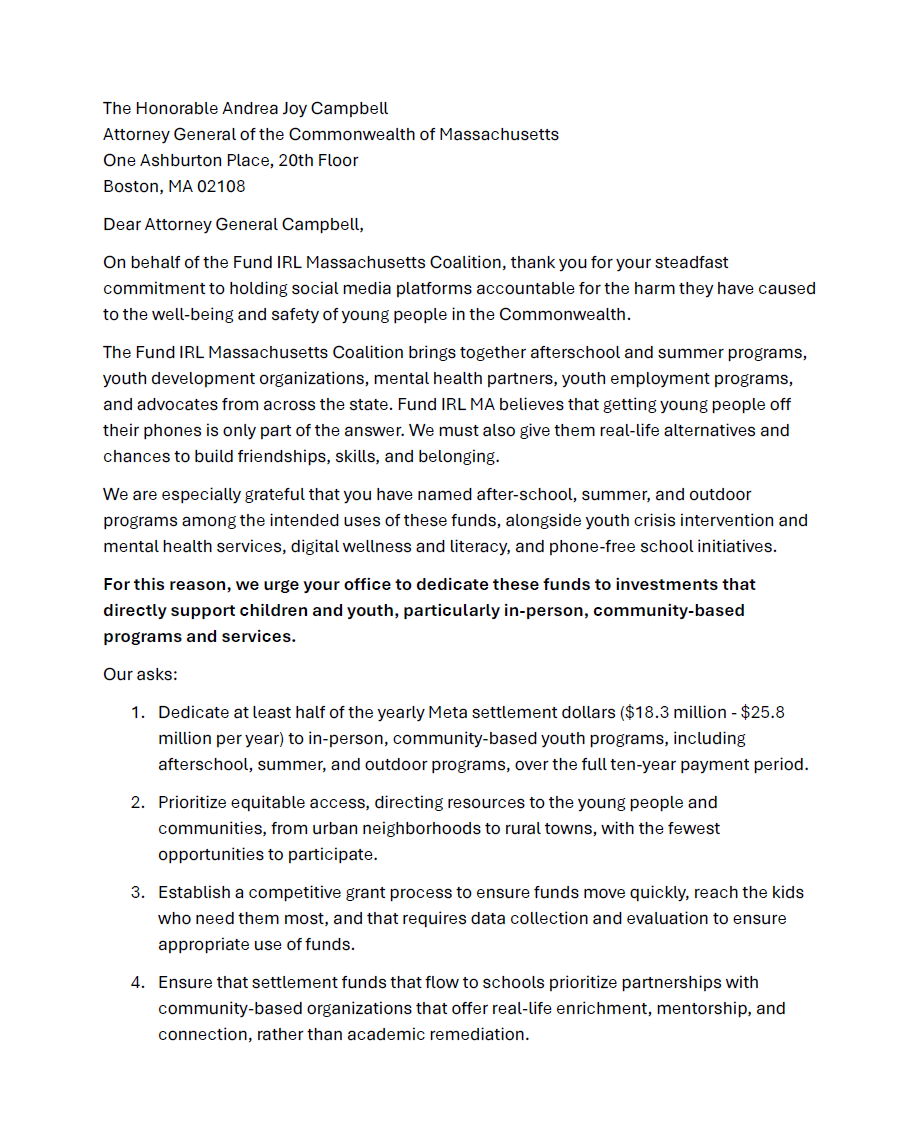
Click the image above to read the full letter.
Resources
Fund IRL - National Website: Fund IRL
Fund IRL is a national coalition working to ensure that payouts from social media lawsuits fund programs and services that promote youth well-being and healthy development.
Guidance to Attorneys General
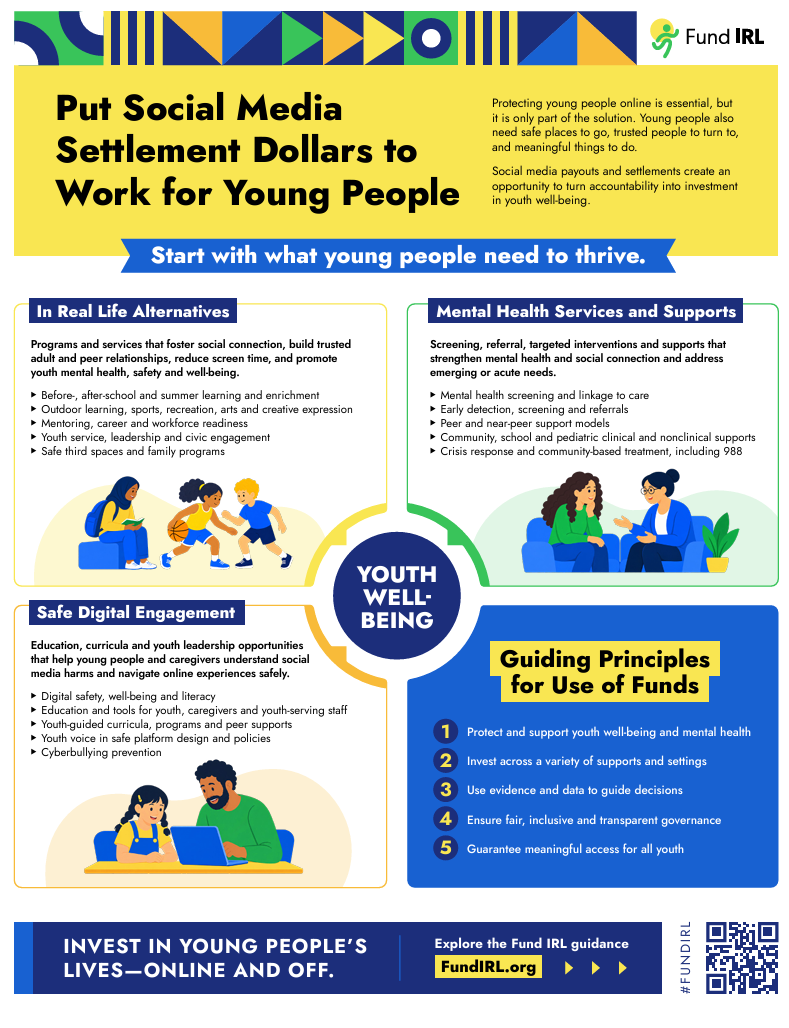
Protect and Support Youth Well-Being and Mental Health: Funds should be used to measurably prevent, mitigate, and remediate harms associated with social media use and promote off-screen connection and resilience for children, youth, and young adults.
Invest Across a Variety of Supports and Settings: Funds should prioritize investments across the behavioral health continuum, including universal access to youth programs and third spaces4 where young people can gather, play, learn, and connect; targeted interventions; and support for children with intensive behavioral health needs. Supports should span a range of community, school, and clinical settings.
Use Evidence and Data to Guide Decisions: Funds should be directed toward policies and programs that demonstrate alignment with research-based youth development and mental health frameworks or ones that are being studied for impact. Allocation decisions should be informed by data on child and youth needs and gaps in access to programs and services
Ensure Fair, Inclusive, and Transparent Governance: Youth and family members, educators, clinicians, researchers, community-based organizations, and community leaders should have a formal role in shaping funding decisions and overseeing program outcomes. Decision-making processes should be structured to ensure funds are allocated equitably, and funding decisions should be transparent and publicly available online.
Guarantee Meaningful Access for All Youth: All school-age children, youth, and young adults should have access to high-quality programs and services that strengthen well-being and mental health, with particular attention paid to meeting the needs of underserved youth and those disproportionately impacted by social media harms. Funds should help connect young people to in-person programs and services and address barriers that limit participation.